
Sara Norcross: Advocating for Motherhood While Battling Hazardous Weight Loss Medications
Johannesburg – Once a chubby girl shaped by harsh words at home, Sara Norcross now spearheads the movement to reframe obesity as a chronic disease and dismantle the stigma that often leads many to dangerous quick fixes.
At a fashionable restaurant in Waterfall, Midrand, the late morning crowd on Saturday, 21 March 2026, moved seamlessly between coffee and conversations, the gentle clatter of plates and cutlery emphasizing a Johannesburg that is always in motion.
I had been there for just over an hour.
Then she arrived.
Not hurried. Not flustered. Just present.
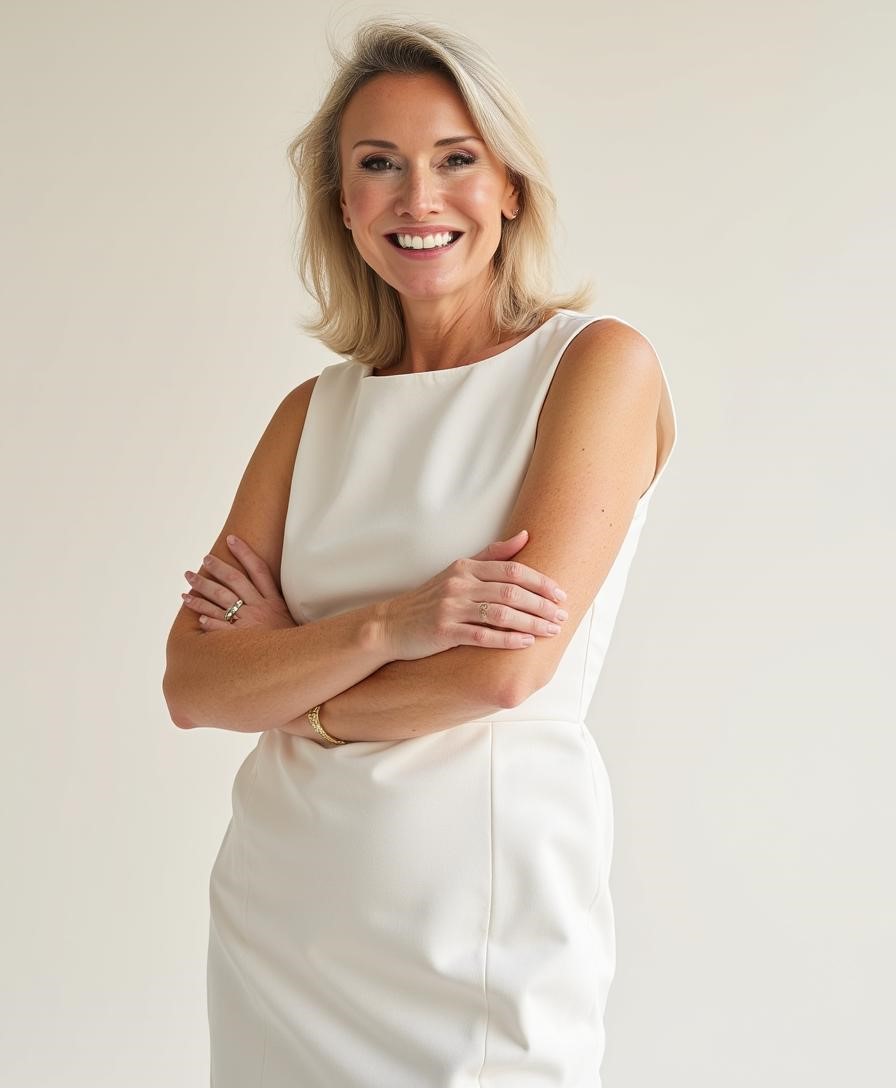
Sara Norcross, Vice President and General Manager of Novo Nordisk South Africa, a Danish multinational, exudes a warmth that puts you at ease before you even reach for your notebook.
She laughs brightly, a hearty, unreserved laugh.
You would not instantly associate her with leading a global pharmaceutical company confronting one of South Africa’s most urgent and underreported public health crises: the surge of illicit, unregulated weight-loss drugs and the escalating challenge of obesity.
Her apology is genuine yet brief.
“I’m really sorry,” she says, settling into her seat.
“These events, you never know how they’ll unfold.”
The “event” is her daughter’s horse-riding competition, the reason for her tardiness.
“She woke us up at five this morning,” Norcross explains with a smile.
“Totally ready. You don’t even need to be there until eight. And today… she won.”
It’s a light comment, yet it reframes everything.
Before the executive, before the policy discussions and boardroom decisions, there is a mother whose day began before dawn, navigating the small urgencies of childhood.
Her three children—two sons (14 and a younger boy) and a daughter (10)—orbit her life with all the demands of modern parenting: school schedules, sports, homework, and the continuous negotiation of attention.
“You divide and conquer,” she says.
“My husband takes my son to soccer; I take my daughter to horse riding. That’s how we get it done.”
The phrase sounds casual, but the structure behind it is anything but.
“You’ve got work, home, school WhatsApp groups, everything,” she continues. “Life doesn’t pause between nine and five.”
She pauses briefly, then adds, almost gently:
“Be kind to yourself. You can’t have everything perfectly arranged.”
For her, this kindness includes regular walking and exercise.
Norcross is intentional about movement, not as luxury but as necessity.
“I have to walk,” she states.
“It’s not optional for me, especially with my back issues.”
She integrates it into the rhythm of her day alongside work and parenting.
For her, exercise is not about looks; it’s about functionality—ensuring she can keep up with life.
At the table, she is easygoing and chatty. Her PR colleague has prepared a potential introduction, neat and polished.
Norcross listens, smiling, but doesn’t adhere to it.
She enjoys spontaneous conversation.
At one point, I joke, “So, you’re a drug dealer?” She bursts into laughter, a genuine, hearty laugh. “My dad used to say the same thing,” she replies.
It’s a flippant moment, yet it carries depth—a line connecting her childhood in Great Britain to her leadership role in South Africa, woven together by humor and reminiscence.
Norcross was born in Manchester, UK, and trained as a chemical engineer, initially drawn to problem-solving and systematic thinking.
Her early tenure at GlaxoSmithKline introduced her to global health systems, including initiatives to broaden vaccine accessibility.
She joined Novo Nordisk seven years ago, focusing on diabetes and obesity in the UK before moving to South Africa three and a half years ago.
“I didn’t initially see South Africa as a possibility,” she admits.
“It was an opportunity that arose.” Like many outsiders, her first view of the country was influenced by algorithm-driven perceptions.
“You Google it,” she says, “and the results aren’t always the reality.”
That perception has since changed significantly.
“I don’t want to leave,” she affirms.
Her connection to South Africa is not theoretical.
It is evident in school runs, weekend activities, family holidays along the beautiful Garden Route, and conversations that flow seamlessly across cultures.
At home, their golden retriever, Zuva, blends into this rhythm as a constant, affectionate companion in a lively household.
“What people see from the outside doesn’t reflect the reality of living here,” she contemplates. “It’s just one narrative, not the whole picture.”
Her father, once devoted to French wine, is now, she laughs, “obsessed with South Africa.”
“He adores the hospitality. He says, ‘Everyone is so warm. I haven’t had a bad glass of wine yet.’”
These small moments shape a bigger truth: what started as relocation has blossomed into belonging.
Yet while her personal life is steeped in warmth and routine, her professional landscape is underscored by urgency.
South Africa is grappling with an escalating obesity crisis.
Approximately 12 million individuals are estimated to be living with obesity or related conditions, creating immense strain on individuals, families, and the healthcare system.
The World Health Organization classifies obesity as a chronic disease, a complex, recurring condition influenced by biological, environmental, and social factors—not merely an issue of personal choice.
For Norcross, this distinction is crucial.
“Obesity is still perceived as a choice,” she states.
“But it’s biological. Two individuals can consume the same foods, yet one gains weight while the other does not.”
This misconception, she elaborates, leads to harmful behaviors.
Compounding the crisis is a growing underground market: unregulated weight-loss drugs marketed through WhatsApp groups and informal channels.
“It keeps me up at night,” she reveals, her tone firm.
“People are getting ill. Some even ending up in ICU. Yet they remain silent.”
“It’s vastly underreported. Because people feel ashamed.”
“They’re hesitant to admit, ‘I was trying to lose weight rapidly, and something went awry.’”
In certain instances, she notes, “patients are actively silenced through legal actions. That’s not just unethical; it’s perilous.”
“I was a chubby baby,” she reflects, almost casually.
“And I had very slim friends. We consumed the same foods, but our bodies responded so differently.”
The stigma surrounding obesity has the dual effect of deterring individuals from seeking help while pushing them towards unsafe yet pricey alternatives.
“People crave anonymity,” she explains.
“They prefer it to be quick and uncomplicated.”
Thus, her mission extends beyond treatment; it consists of reshaping the national dialogue.
“You can’t simply deliver medication,” she asserts.
“You have to build the supporting infrastructure.”
This is where policy aligns with practice.
Norcross emphasizes the importance of collaborations between government, the private sector, and communities in addressing the issue.
Access to medicine, she clarifies, isn’t just about availability; it’s also about ensuring the right frameworks, training, and support exist so that patients receive safe and consistent care, including newer treatments like GLP-1 receptor agonists.
“It necessitates partnerships,” she remarks.
“Government, healthcare providers, and communities all play essential roles if we genuinely aim to make treatment accessible and sustainable.”
“Training, training, training,” she insists.
“You must support healthcare workers. You have to ensure the system can effectively integrate what you’re providing.”
One initiative she frequently references is a school-based program in Soweto, part of a global initiative active in six countries.
“It’s about transforming the trajectory of children’s lives,” she describes. “Understanding food, movement, behavior—every aspect.”
Implemented in 22 schools with the cooperation of the Gauteng Department of Health and other partners, the project aims to identify scalable and sustainable interventions.
“You can’t merely suggest everyone eat organic food,” she advises. “It must be practical. It must adapt to that environment.”
The model is comprehensive: nutrition, physical activity, education, and community involvement.
“It’s not a one-off intervention,” she emphasizes. “It’s about what can be effective nationally.”
Her insights draw from lessons learned during South Africa’s HIV response.
“They treated it with urgency,” she states.
“They reinvented the model, engaging pharmacists and community workers.”
“They didn’t depend solely on the traditional system.”
She pauses.
“We need that kind of innovative thinking once more.”
Despite the enormity of the challenge, Norcross refrains from portraying herself as the focal point of the solution.
“I’m surrounded by brilliant minds,” she comments.
“My role is to eliminate barriers and enable their success.”
Her leadership style is based on humility and collaboration rather than authority.
“I can’t fill the head of finance position, or the head of HR,” she laughs. “These are specialists.”
Back at the table, the dialogue shifts from policy to parenting, from national issues to minor household mishaps.
At one moment, she reminisces about a time when her son arrived at a school assembly in full uniform on a casual day, the sole one dressed inappropriately.
“You just have to laugh,” she says. “Perfection isn’t possible.”
It serves as a gentle reminder that amid the heaviness of her responsibilities, her days are still filled with ordinary moments, missed messages, early mornings, shared meals, and little blunders that evolve into family anecdotes.
As the restaurant begins to clear out, Norcross gathers her belongings. Another meeting awaits.
Another set of decisions.
Another day in motion.
Yet there’s still paperwork: visas, applications, the gradual process of turning temporary status into permanence.
But with how she speaks, the ease with which she navigates between different realms, and the seriousness with which she approaches this one, it feels certain.
For Sara Norcross, South Africa has transcended being merely an assignment.
It has become home.
And in the middle of an early wake-up call, a child’s triumph on horseback, and a discussion about saving lives in a Midrand café, she has claimed her position within it—not as a visitor passing through, but as someone deeply and intentionally invested in its future.