
BLSA Reform Tracker Q1 2026: Ongoing Progress in Reforms
Johannesburg – The latest BLSA Reform Tracker Quarterly Review, spanning January to March 2026, indicates that South Africa’s overall reform completion index stands at 71.75, reflecting a 27% increase from the March 2024 baseline.
Quarterly progress has slowed to 0.4 points, with a 4% decrease in freight logistics and a second consecutive quarter without any advancement in governance reforms remaining the primary concerns.
Managed by research consultancy Krutham for Business Leadership South Africa (BLSA), the Tracker monitors 245 reform deliverables across economic, criminal justice, and governance categories.
“Having tracked South Africa’s reform programme for eight quarters, the overall trajectory remains positive,” BLSA CEO Busisiwe Mavuso stated on Thursday, 23 April 2026.
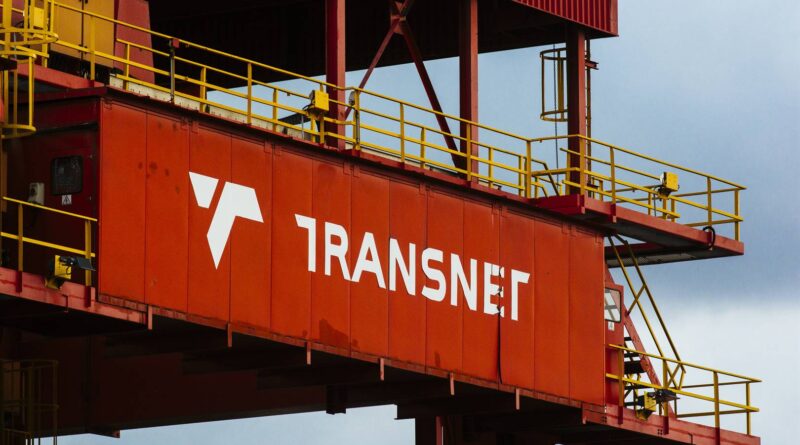
Regarding the freight logistics setback, Mavuso mentioned that at this stage of Transnet’s unbundling process, the structural framework leaves the SOE acting both as referee and player, coinciding with the industry’s opening to private sector participation. Similar challenges affect reforms in the energy sector.
“This framework incentivizes Eskom and Transnet to prioritize their own interests,” stated the BLSA CEO.
“Consequently, we face a scenario where a state entity might reasonably resist certain reforms.”
Resolving these structural tensions is a priority, but Mavuso emphasized that the reform agenda must also look ahead.
“It’s equally important to consider what follows next—addressing new challenges within existing reform areas and identifying entirely new areas that necessitate fundamental reform for the country’s long-term viability,” she said.
“BLSA is actively working on that agenda.”
Freight Logistics
The freight logistics completion index decreased by 4% to 69.16, marking the most significant single-category drop for the quarter, due to delays in regulation, market reforms, and private sector involvement in ports and rail.
The Network Statement Volume 4, considered largely unbankable by operators and financiers, remains unpublished past its February 2026 deadline.
On a positive note, the Economic Regulation of Transport Amendment Act was signed in March, seven private train operating companies are in advanced talks with the Transnet Rail Infrastructure Manager, and port concession activities have surged, with the Durban Gateway Terminal now operational and RFQs issued for Richards Bay and Ngqura.
Energy
The electricity index rose from 67.63 to 69.05 after President Cyril Ramaphosa confirmed during his February State of the Nation Address that the Transmission System Operator will be independent and manage transmission assets, countering an agreement between Eskom and the Department of Electricity and Energy that retained assets within Eskom.
A task team led by Treasury is expected to report to the president on this issue in May.
The South African Wholesale Electricity Market (Sawem) internal launch is anticipated in June 2026, with full market functionality projected for 2028.
Delays with the Gas Master Plan continued as Nedlac consultations did not conclude as expected.
Criminal Justice
The criminal justice index improved from 84.05 to 85.77, spurred by a significant enhancement in Financial Intelligence Centre capacity, with its index score rising from 50 to 75.
Bank compliance with anti-money laundering and counter-terrorism financing requirements has also increased, with comprehensive three-year risk and compliance reporting obligations confirmed.
Governance
Governance reforms remained unchanged at 54.38 for the quarter, marking it as the lowest-scoring and slowest-moving category.
However, immediately following the review period on 1 April, the Public Service Amendment Act and Public Administration Management Amendment Act were enacted.
These acts limit the authority of ministers and premiers to appoint staff below the head of department level, a direct response to recommendations from the Zondo Commission.
A persistent structural issue remains: the president and premiers still have the power to appoint heads of departments without independent oversight.
Financial Sector
Reforms in the financial sector achieved the most substantial gains, rising from 85.05 to 87.96, bolstered by extensive post-Budget activity.
Most major reforms are now legislated and active: bank deposit insurance (CODI) is operational, the two-pot retirement system is in effect, the ZARONIA transition is on a published schedule, and PayShap is live.
The consolidation of the National Financial Ombud Scheme remains in advanced design but has yet to launch.
Water and Housing
The NWRIA Amendment Bill is pending presidential signature, which is expected in Q2 2026.
Green Drop certifications for wastewater systems have decreased from 22 to 14 since 2022, while Blue Drop qualifications showed a slight improvement.
In housing, there are currently 212 stalled or blocked projects nationwide, totaling approximately R37bn, with the title deeds backlog unquantified.
Outlook
Key milestones for Q2 2026 include: TSO task team report to the president (May); Transportation Economic Council commencement; NWRIA bill signature and board appointments; National Water Action Plan; and the internal launch of Sawem (June).
Click here to view the BLSA Reform Tracker Quarterly Review
Click here to view the Reform Tracker Presentation