
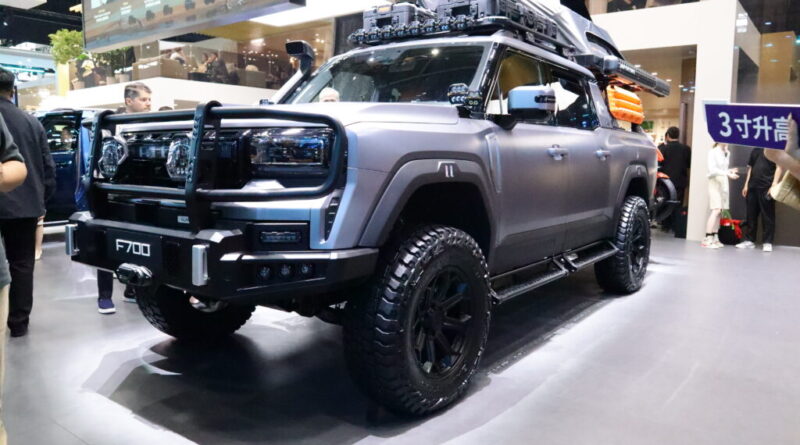
Off-Road Market Transition: From Toughness to Lifestyle
If there’s one segment of the automotive industry that typically moves at its own pace, it’s the off-road category. This isn’t due to a resistance to innovation, but rather a strong emphasis on reliability above all else.
In South Africa, off-roading is heavily influenced by practicality. The combination of long distances, diverse terrains, and limited infrastructure in certain areas means vehicles are expected to perform reliably in demanding conditions.
In this context, trust plays a crucial role in purchasing decisions, prompting a more fundamental question amid the current wave of innovation.
As new technologies, design philosophies, and pricing strategies begin to reshape the market, how much of these changes will permeate the off-road segment?
Manufacturers like Jetour are starting to approach this area with a fresh perspective, merging traditional SUV capabilities with modern elements—from upgraded in-cabin technology to contemporary designs—while still emphasizing accessibility.
Advanced technology
Central to this approach is the intentional use of technology.
“Our vehicle technology is designed to enhance capability, not replace it,” states Ke Chuandeng, president of Jetour International.
“It aims to make off-road driving easier, more controlled, and increasingly accessible.”
While there is evident interest in incorporating advanced features, the fundamental expectations of an off-road vehicle remain largely unchanged. Capability, durability, and user-friendliness remain at the core of the value proposition.
What seems to be emerging is not a complete overhaul, but rather a gradual evolution.
For instance, advancements in traction control, suspension technology, and driver-assist features are being integrated in ways that enhance, rather than overshadow, traditional capability.
In many cases, these technologies are intended to make off-roading more approachable—especially for those who are new to the segment.
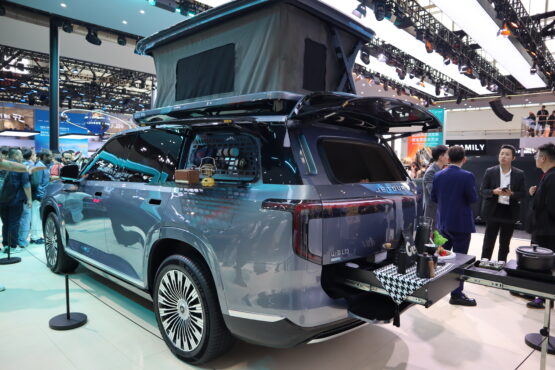
The future isn’t solely about where a vehicle can travel—it’s about ‘how much more it allows you to achieve when you arrive’. Image: Supplied
“With intelligent systems, even novice drivers can navigate more challenging terrains with assurance. This is essential for the evolution of the segment,” remarks Chuandeng.
However, this transition is occurring not just inside the vehicle but also in how it is perceived. Newer brands are making noticeable shifts by positioning the vehicle as part of a wider lifestyle ecosystem.
This positioning is being reflected in the product development pipeline.
Upcoming models like the F700 pick-up and G700 SUV illustrate a more focused effort in the off-road and lifestyle space—vehicles not only built for capability but also designed for broader applications that resonate with how consumers increasingly interact with their vehicles.
In that sense, these are not just new models; they embody a more comprehensive philosophy—one that views the vehicle as a platform for travel, utility, and experiences.
Travel+ culture
The concept is straightforward: the vehicle should serve as a platform for travel, rather than merely as transportation—shifting from creating for terrains to designing for experiences.
This includes integrated accessories and extensions for various uses, from camping gear and modular storage options to wearable technology that interacts with the vehicle.
In some cases, functionality even allows drivers to manage specific vehicle features remotely via connected devices, blurring the lines between automotive and consumer technology.
This represents a different perspective on off-road ownership.
“Our goal is to merge robust mechanical capabilities with modern features, allowing customers to enjoy both,” emphasizes Chuandeng.
Practically, this aligns with how many off-road vehicles are utilized in markets like South Africa—not just for driving, but for extended travel, camping, and overlanding.
The distinction is that these aspects are increasingly being integrated at the design stage rather than being offered as aftermarket additions.
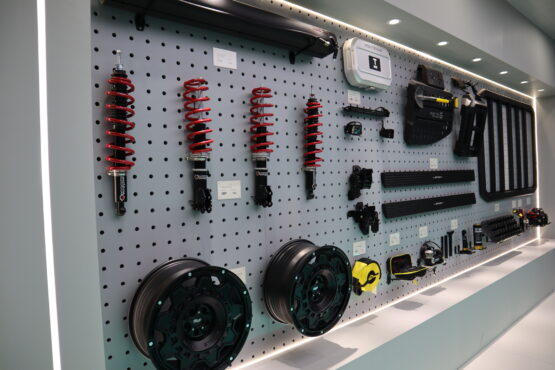
The environments in which off-road vehicles operate continue to demand simplicity, durability, and resilience. Image: Supplied
Charging capabilities are now part of this equation.
As vehicles integrate more electronic systems—some even incorporating hybrid or electrified elements—being able to power external devices, from camping tools to portable gadgets, has become a functional asset rather than just a gimmick. For a segment founded on self-sufficiency, this capability is undoubtedly relevant.
Nonetheless, the bedrock principles remain unchanged, as reliability is vital in this segment.
“We understand that off-road customers prioritize reliability and practical usability. Any new technology must meet those expectations first,” states Chuandeng.
This area highlights the tension most clearly.
On one side, innovation is broadening what vehicles can achieve—both on-road and off-road. On the other side, the environments where off-road vehicles operate demand simplicity, durability, and resilience.
Electrification introduces an additional level of complexity to this dialogue.
While hybrid systems may provide a transitional route, fully electric off-roading still contends with practical challenges—especially concerning range and charging facilities in remote areas. Consequently, the transition is unlikely to be consistent across all uses.
Instead, we are witnessing a more thoughtful progression that acknowledges the segment’s realities.
“The transition in this area will take time. It’s not about supplanting what works, but rather enhancing it incrementally,” adds Chuandeng.
This measured approach reflects a greater understanding of the market. Instead of imposing change, manufacturers are increasingly opting for gradual introductions—allowing consumers to adjust while preserving the essential qualities that define the segment.
In this context, integrating lifestyle elements may be one of the more viable entry points.
Drivers may be slower to embrace entirely new drivetrains or systems, but they are often more receptive to enhancements that elevate the overall experience—be it convenience, comfort, or extending the time spent off the grid.
“As customer preferences evolve, we believe the segment will develop alongside them—but always keeping capability at the forefront,” Chuandeng states.
So, is the off-road market ready for a transition? The answer isn’t simply yes or no. It is already beginning to adapt—but in a manner that aligns with the realities of how these vehicles are utilized. The shift may not be propelled purely by technology; it may be guided by lifestyle trends.
In this light, the transition is less about discarding the past and more about broadening the horizons of what the off-road experience can be.
As Chuandeng puts it: “The future of off-roading isn’t just about where a vehicle can lead you—it’s about how much more it empowers you to achieve when you arrive there.”
Brought to you by Jetour.