President Ramaphosa Initiates PCC Meeting, Commits to Addressing Water Crisis
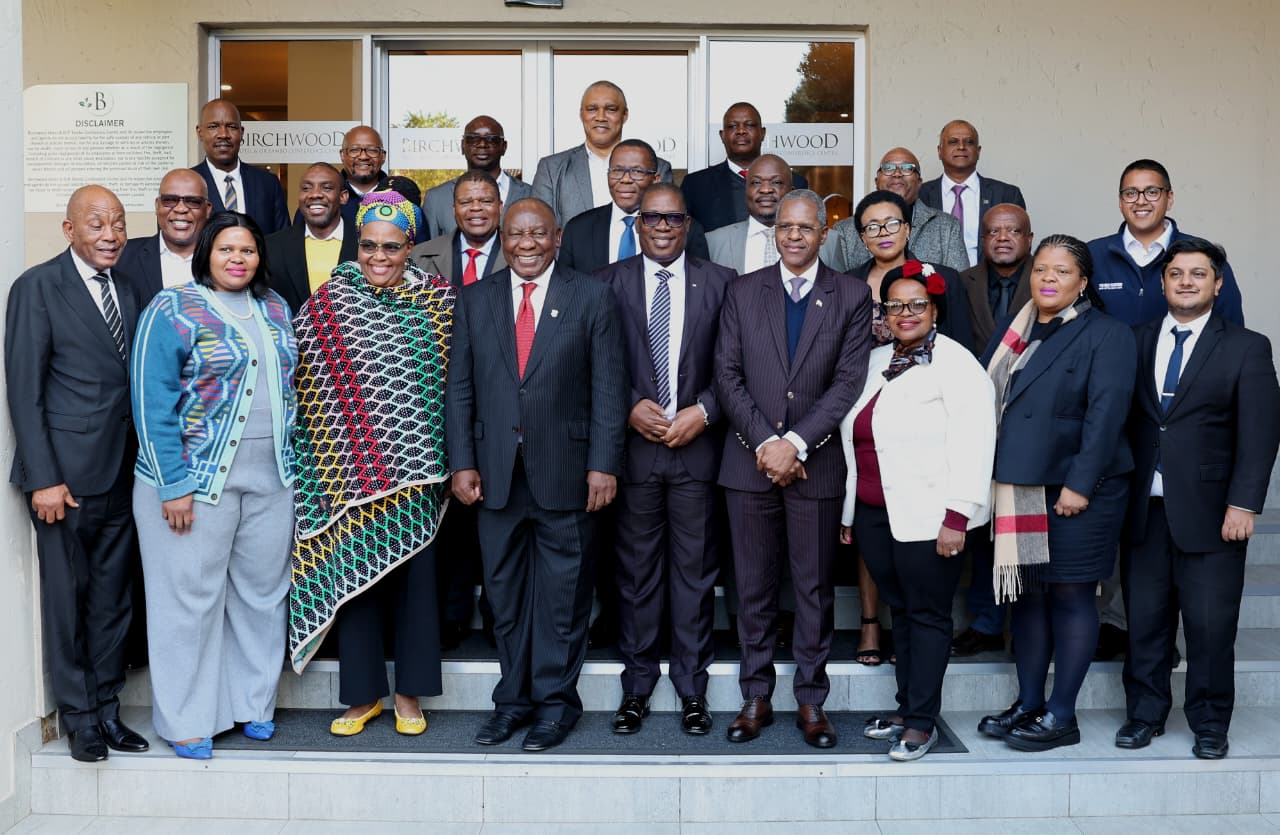
Pretoria – On Thursday, 30 April 2026, President Cyril Ramaphosa inaugurated a pivotal session of the Extended President’s Coordinating Council (PCC) at Birchwood Hotel in Ekurhuleni, marking the first time national ministers, premiers, mayors, and municipal managers convened together.
He characterized the assembly as a “historic gathering” focused on enhancing cooperative governance among South Africa’s three tiers of government.
Formed to align national priorities with local and provincial plans, the PCC now faces the challenge of addressing systemic weaknesses within local government.
President Ramaphosa remarked that numerous municipalities struggle with poor financial oversight, insufficient institutional capacity, and weak service delivery, causing everyday South Africans to suffer from water shortages, electricity outages, and deteriorating infrastructure.
“Our mission in this meeting is not to reiterate the list of failures but to concentrate on actionable solutions,” Ramaphosa stated, emphasizing that the upcoming White Paper on Local Government will be crucial in rethinking municipal operations.
He advocated for reducing red tape, professionalizing local governance, and ensuring appointments are merit-based to enhance accountability and efficiency.
A substantial portion of the meeting was allocated to addressing the escalating water and sanitation crisis.
While access to piped water has improved since 1996, reliability has deteriorated, with 34% of households experiencing interruptions lasting longer than two days in 2024.
President Ramaphosa pointed to aging infrastructure, illegal connections, inadequate maintenance, and rising municipal debt as significant contributors to the crisis.
Many metropolitan municipalities are losing as much as half of their purchased water before billing, and debt owed to water boards has tripled since 2018.
In response, President Ramaphosa announced the creation of a National Water Crisis Committee to coordinate a comprehensive governmental response, backed by a National Water Action Plan.
He outlined five guiding principles: restoring accountability, securing financial integrity, boosting technical expertise, enforcing consequence management, and making cooperative governance a reality.
“Each institution represented here must understand its role, responsibilities, and deadlines,” he said.
“The people of South Africa have the right to know who is accountable if commitments are not fulfilled.”
President Ramaphosa urged municipalities to take the lead in service delivery, ensuring the provision of reliable energy, water, and infrastructure to bolster businesses and communities.
He stressed that ongoing reforms through Operation Vulindlela and the District Development Model must begin to yield concrete advancements at the local level.
“The nation is depending on us to ensure a consistent supply of water for all citizens, businesses, and institutions, both now and in the future,” President Ramaphosa concluded.
“We have the resources to achieve this. Let us prove our determination.”