
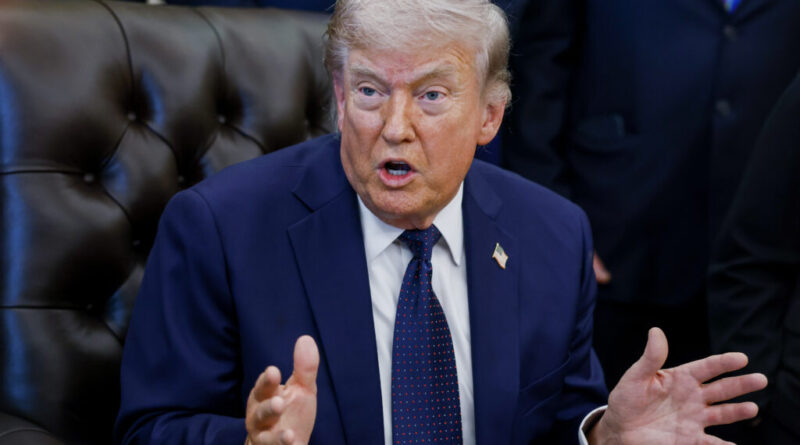
Trump Unveils Strategy to Secure Shipping in the Hormuz Strait
President Donald Trump announced that the US will assist ships stranded in the Persian Gulf in their transit through the Strait of Hormuz, characterizing it as a “humanitarian gesture” and testing his ability to restore traffic in the strategic waterway for the first time since the conflict with Iran began.
The initiative, named Project Freedom, was set to commence on Monday, with the US military committing to provide support, including guided-missile destroyers, aircraft, and drones.
“The movement of ships is merely intended to liberate individuals, businesses, and nations that have done nothing wrong – They are victims of circumstance,” Trump stated late Sunday in a social media update. “If this humanitarian effort is disrupted in any way, that interference will, regrettably, need to be addressed forcefully.”
Trump noted that some of the ships stranded in the Persian Gulf have large crews running low on food as they await safe passage through Hormuz. He mentioned that several countries had sought US assistance in releasing their vessels.
Read:
Oil steadies with Trump’s Hormuz plan and tanker attack in focus
Aged oil tanker suggests Iran is reactivating retired ships
ADVERTISEMENT
CONTINUE READING BELOW
The plan has left shipping executives bewildered, as few details were provided by the president. Following Trump’s announcement, Iran’s military warned that US forces would be attacked if they entered the Strait of Hormuz, according to a statement from Iranian broadcaster Press TV.
The US has established an “enhanced security area” to support transits, as noted by the Joint Maritime Information Center on Monday. JMIC, a multinational organization analyzing security threats in the region, advised vessels to consider routing through Omani waters, while also warning of the presence of mines north of those waters.
Further reports of attacks on vessels emerged. A tanker reported being struck by projectiles approximately 80 miles (129 kilometers) north of the UAE port Fujairah on Sunday, according to UK Maritime Trade Operations, which provides regional security updates. This incident occurred less than a day after a bulk carrier was reportedly attacked by small boats.
Trump’s announcement coincided with a deadlock between Iran and the US. A fragile ceasefire has been in place since April 7, with both parties struggling to agree on the prospects for peace talks. In the same Truth Social post, Trump mentioned ongoing dialogues with Iranian authorities that “could lead to something very positive for all.”
He has maintained a similar approach in recent weeks, but negotiations have yet to resolve the stalemate.
ADVERTISEMENT:
CONTINUE READING BELOW
At the heart of the dispute is Hormuz, where Iran has obstructed almost all vessel traffic. Iran has declared it will only reopen the strait after the US lifts its naval blockade on Iranian ports. Washington insists that Tehran must act first, believing its restrictions are straining Iran’s economy and will compel Tehran to make concessions.
Read:
Trump states he rejects Iran’s Hormuz offer
Brent jumps to $123
US has spent $25bn on the Iran war so far – Pentagon
Here’s more on the conflict:
- Oil prices rose on Monday in early trading, with Brent increasing by 1.8% to just over $110 a barrel.
- Iran is assessing a US response to its recent 14-point plan aimed at ending the war, as reported by Iranian TV on Sunday, citing a foreign ministry spokesperson.
- Over the weekend, Trump indicated that the proposal may not adequately meet his expectations. Iran’s Tasnim News Agency reported that the plan called for a complete end to the conflict within 30 days and included guarantees against renewed strikes on Iran. It reiterated Tehran’s previous demands, including the withdrawal of US forces from near Iran, the lifting of the maritime blockade, the removal of sanctions, and reparations. The nuclear issue was not addressed.
- China has instructed its companies to disregard US sanctions on private refiners associated with the Iranian oil trade, marking an unprecedented challenge that may ensnare a vast banking sector amid rising tensions between the world’s two largest economies.
© 2026 Bloomberg