
Nike Faces New Challenges as China Concerns Fuel Dip-Buying Discussions
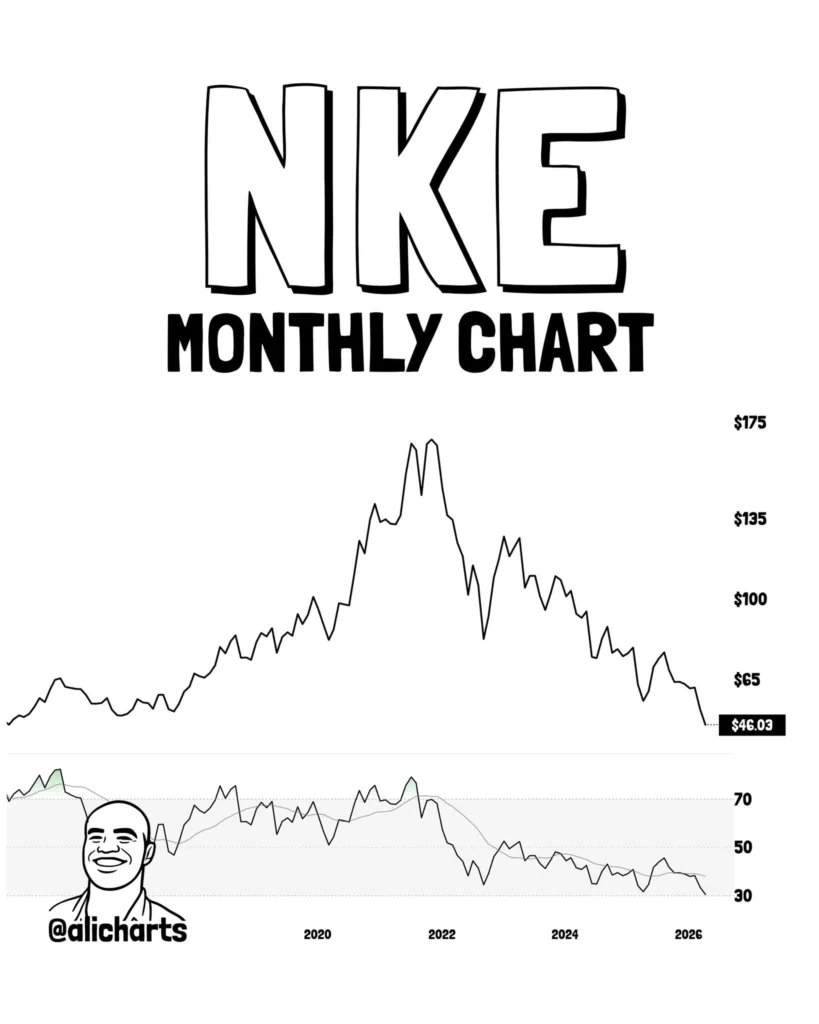
Nike’s stock has plummeted to a decade-low range between $42 and $46, following a significant decline from its peak in 2021.
Summary
- Nike’s shares have reached decade lows due to weak demand in China and brand pressures that have affected investor sentiment.
- Converse has seen a drastic drop in revenue, while Nike has shifted its strategy back towards wholesale partnerships, stepping away from its direct-to-consumer focus.
- Following the cessation of Web3 services, Nike sold RTFKT, which attracted renewed attention with recent stock purchases by board members.
Market analysts are now closely monitoring the company’s ability to stabilize sales following disappointing results in April 2026 and a consistent decline in investor confidence.
Furthermore, the stock has wiped out years of gains, currently trading significantly below its all-time high of $179.10. Technical analysis from market expert Ali Charts revealed that Nike’s monthly RSI has hit an all-time low, indicating the stock is in deeply oversold territory.
Nike continues to encounter significant challenges in China, a market that has been vital for its growth. Forecasts suggest a 20% decline in sales in this region as consumer preferences shift towards domestic sportswear brands.
Competitors like Li-Ning have gained traction by enhancing their performance products and appealing to mid-to-high-tier consumers. This shift has pressured Nike’s premium status as younger shoppers increasingly prefer local brands associated with “Guochao.”
Strategic Adjustments Amid Weaker Demand
Nike has also reported poorer performance in its lifestyle division. Converse’s substantial revenue drop has raised concerns about declining demand in segments previously pivotal to the company’s broader brand appeal.
In response, Chief Executive Elliott Hill has sought to fortify wholesale relationships with retailers, including Foot Locker and Dick’s Sporting Goods. This adjustment marks a retreat from the direct-to-consumer strategy that Nike had aggressively pursued to enhance margins and maintain tighter control over sales channels.
Additionally, in December 2025, Nike divested its digital fashion segment RTFKT, as reported by crypto.news. This sale followed the decision to discontinue Web3 services and pause NFT releases, although some gaming-related items remain available.
This divestment occurred as the NFT market faced ongoing challenges, with reports indicating a more than 67% decline in market value within the past year. Several major platforms have shifted their strategies, and some events have been canceled. Nike has not disclosed the identity of the buyer or any financial details regarding the RTFKT sale.
Despite the downturn, Nike’s board has demonstrated its support. Apple’s Chief Executive Tim Cook, who is on Nike’s board, reportedly purchased around $3 million in shares, while director Bob Swan invested approximately $500,000. These stock purchases have garnered attention as investors contemplate whether the company’s current difficulties signal a necessary reset or a more profound decline.
Disclosure: This article does not constitute investment advice. The content and materials presented here are intended for educational purposes only.