
Ports are Essential for Boosting South Africa’s Economic Growth
You can also enjoy this podcast on iono.fm here.
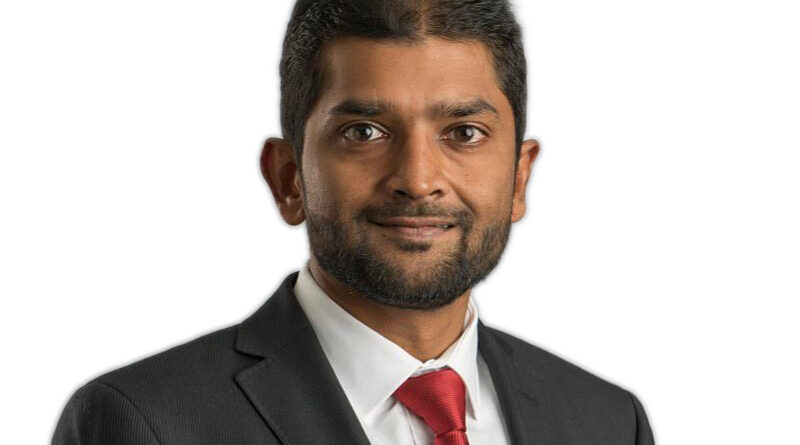
JIMMY MOYAHA: Transnet National Ports Authority (TNPA) has announced that its interim chief executive officer will officially assume the role of chief executive officer on Friday, May 1st – Workers’ Day.
Mohammed Abdool is on the line now to discuss this announcement and what it means for Transnet Ports.
Mr. Abdool, it’s great to have you on the show. Thank you for joining us. Before we continue, congratulations are in order. Although you haven’t officially taken the position on paper, you’ve clearly been fulfilling the role. Congratulations.
MOHAMMED ABDOOL: Good evening, Jimmy, and good evening to your SAfm listeners. Thank you for the kind words; I truly appreciate it. It’s a pleasure to be on your show this evening.
JIMMY MOYAHA: Mohammed, you are stepping into a significant role at Transnet [National] Ports Authority. The management of the ports on a national level is crucial for both Transnet and South Africa’s economy. You have a rich history with this organization, having worked in various capacities including CFO and now CEO.
Can you share your insights on the future positioning of Transnet Ports Authority and its essential role in South Africa?
MOHAMMED ABDOOL: Thank you, Jimmy. The purpose of the National Ports Authority is to function as a multi-port authority for the country.
We manage eight commercial ports along a 2,900 km coastline, along with Port Nolloth, which is less commercial than the others.
ADVERTISEMENT
CONTINUE READING BELOW
These ports are critical assets for the country.
With approximately 90% of cargo flowing through these ports or harbors, the importance of TNPA becomes evident.
Our vision for TNPA is to create a transformed and sustainable world-class port system.
I envision a modernized commercial port ecosystem capable of fostering inclusive economic growth in an environmentally sustainable way.
JIMMY MOYAHA: Mohammed, let’s discuss TNPA’s position in Africa. There was a time when South African ports were the largest on the continent, and as global trade evolves, we are considering how to reposition these ports to capitalize on challenges like those faced in the Suez Canal and the Strait of Hormuz.
I’d like to hear your thoughts on our strategy to attract global trade flows that our ports are capable of handling, especially in the context of recent investments in ports like Kenya by DP World.
MOHAMMED ABDOOL: Thank you, Jimmy. TNPA, like Transnet, has been grappling with a challenging recent history, including significant financial difficulties.
We have not invested adequately in our port system and, as you noted, we’ve lost our competitive edge on the African continent to ports like Maputo and Walvis Bay. This has been a difficult chapter for us.
ADVERTISEMENT:
CONTINUE READING BELOW
However, I remain optimistic due to the achievements we’ve made as Transnet. You may recall our launch of the recovery plan with the new board around 2022/23, which has yielded positive results.
We are now progressing into a space where we have substantially recovered.
Our strategy aims to restore TNPA to its former prominence in African trade. This is part of the Reinvent for Growth (R4G) strategy at Transnet. The strategy is built on three main pillars.
The first is to fix and optimize the business, restoring it to its rightful level. Secondly, the transformation of the business is essential, particularly within the freight logistics roadmap and relevant government policies regarding trade flows in our country. TNPA is also prepared for corporatization, which comprises our second pillar.
The third pillar focuses on expansion—identifying ways to position South African ports as leading logistics hubs. We are confident that we can regain our competitive ground in African trade and complement other ports on the continent.
JIMMY MOYAHA: Mohammed, before we wrap up, what do you see as the greatest challenges currently facing TNPA? Given your extensive experience with the organization, what do you believe remains the biggest hurdle, and is there a strategy in place to confront it?
MOHAMMED ABDOOL: For me, the key focus area is undoubtedly the chronic underinvestment in our port system, which is high on my agenda.
ADVERTISEMENT:
CONTINUE READING BELOW
Our successes so far have primarily relied on significant investments made up until the early 2000s.
However, in the last decade and a half, there has been minimal investment in the port system.
While we’ve made some investments in marine craft upgrades, we are lacking in real ‘expansionary projects’ and the introduction of new handling modes, such as LPG (liquefied petroleum gas) and LNG (liquefied natural gas).
Addressing this underinvestment will be critical, and we are collaborating with various teams and stakeholders to develop initiatives.
Additionally, we aim to leverage our partnerships with the private sector to facilitate some of these investments beyond just our balance sheet.
These are a few strategies we are implementing to tackle the chronic underinvestment in our port system.
JIMMY MOYAHA: Leveraging partnerships and regaining TNPA’s leadership role—that’s the commitment from incoming CEO Mohammed Abdool, who has already been acting in this capacity and will officially step into the role on May 1st.
Thank you, Mohammed. Wishing you and your team all the best for the future.