
An African Barista’s Remarkable Journey
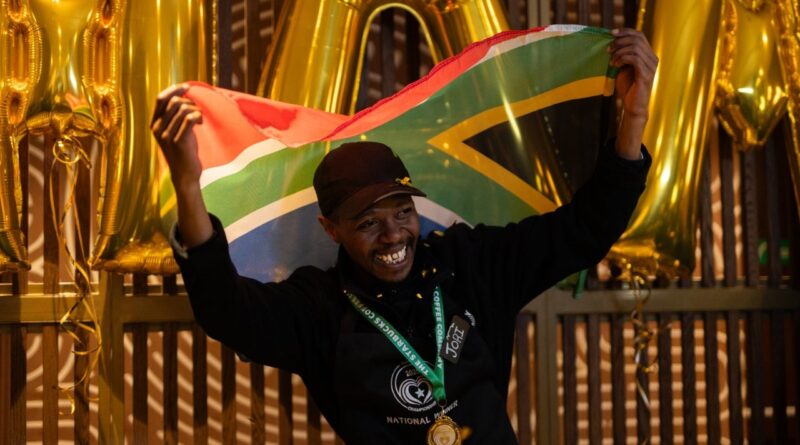
Johannesburg – When Starbucks opened its first store in Africa a decade ago, Kabelo Jori was just starting his own journey behind the bar. This month, their stories converge.
Rwanda is not a random stop on the coffee map. Starbucks has been sourcing coffee here since 2004, a decade after the 1994 genocide.
Coffee emerged as a key element in the country’s recovery. In 2009, the Kigali Farmer Support Centre was established, becoming the first of its kind on the African continent.
Agronomists there collaborate with smallholder farmers on improving yields, soil health, and sustainable practices.
Nearly half a million Rwandan farmers now rely on the coffee industry. Behind each bag found on South African shelves are over two decades of quiet collaboration.
For one South African barista, this journey is about more than just serving a cup he has prepared countless times.
It is a narrative shaped by the essence of coffee.
Kabelo triumphed over 83 fellow partners to secure a spot on the Starbucks Origin Experience trip to Rwanda.
This trip will take him to the source of one of the brand’s most esteemed coffees.
A coffee he has served numerous times.
In a place where his feet have never yet stood. He was asked to share what this journey signifies for him.
Upon hearing “Rwanda,” one word couldn’t encompass his feelings.
“Honestly, it felt larger than excitement. It was a blend of disbelief and responsibility. Rwanda wasn’t merely a destination,” Kabelo explains.
“It felt like being invited back to the genesis of something I’ve been part of for years without fully grasping it.
“I was nervous, yes, but more than that, I felt chosen to carry a story.”
At some point, this journey transcended mere competition.
“It ceased to be a contest the moment I realized I wasn’t trying to win anymore. I was aiming to represent,” Kabelo reflects.
“Represent my store, my partners, and every cup I’ve ever served.
“That transition from proving something to standing for something is when it became a calling.”
The purple apron signifies mastery. This trip is reshaping what that word means to him.
“Previously, mastery was about precision, recipes, technique, and consistency. Now, mastery is about connection,” Kabelo states.
“It’s about understanding the hands behind the coffee, the soil, the story, and carrying that understanding with intention every time I serve a cup.”
He has served Rwandan coffee to hundreds of guests. Now, he will stand where it originates.
When he returns, one thing must change.
“I hope my hands slow down. Not in terms of skill, but in awareness,” Kabelo shares.
“I want every action to carry meaning, recognizing exactly where this coffee comes from and who made it possible.
“I don’t just want to prepare drinks. I want to honor them.”
When asked what a perfect cup feels like, he steers clear of taste.
“A perfect cup feels like presence. It’s as if everything else pauses for a moment. It’s warmth, yet also clarity,” Kabelo remarks.
“It’s that quiet moment where nothing needs to be altered or added. You perceive it before you even think about it.”
Behind the bar, there’s a moment when everything stills. He knows exactly what it looks like.
“Yes. It’s that moment just after the first sip, when someone falls silent. They just pause,” Kabelo explains.
“You can see it on their face. That silence is everything. That’s when I know the coffee has achieved something deeper than just tasting good.”
When asked what Rwanda’s coffee might say to South Africa, he replies:
“Slow down and listen to me. Don’t just taste me, but understand me. There’s a story in every sip, and it deserves your attention,” Kabelo conveys.
Getting a coffee right is not solely about technique; sometimes it hinges on instinct.
“I’ve remade drinks more times than I’d care to admit. Not because they were incorrect on paper, but because they didn’t feel right,” Kabelo confides.
“Sometimes you just know. It might appear perfect, but if it doesn’t sit well with you, you start over.”
Kabelo boards the flight to Rwanda.
The question is, who will return?
Someone more grounded. More aware. Less concerned with impressing others and more focused on intention.
The person coming back understands that coffee isn’t merely a product. It embodies people, place, and purpose.
Ten years on, this is what the brand has cultivated.