
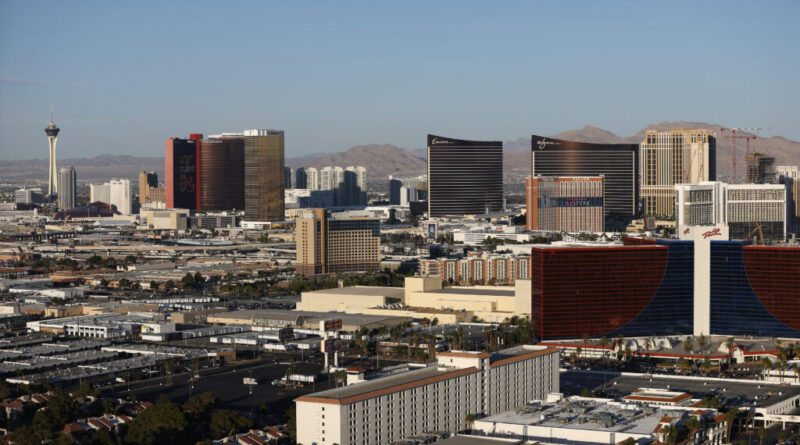
While the Las Vegas Strip Calms, Local Casinos Thrive
In Las Vegas, a bifurcation of gaming experiences is unfolding: the Strip is perceived as ‘dead’ by some pessimists. Meanwhile, away from the glitzy mega-resorts, local casinos maintain a vibrant atmosphere.
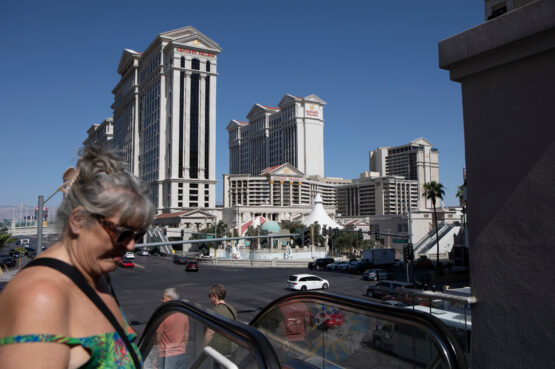
The four-mile Strip has witnessed a decline in business as tourists shy away due to escalating costs. Parking fees for an evening out can reach $25, resort fees may soar to $50, a bottle of water can cost $26, and a cup of coffee is priced at $12. This discrepancy clashes with constrained budgets amid ongoing inflation and tepid consumer sentiment.
“The view of Vegas has shifted to reflect that it may not offer the exceptional value it once did,” remarked Truist analyst Barry Jonas, who has a buy rating on Caesars Entertainment Inc. and a hold on MGM Resorts International. These two companies dominate the Strip’s property market.
Read: Pandemic poker results in fewer players, fewer drinks, and bizarre bets
“I was taken aback by the lodging prices,” noted Patrick Suter, who visited Las Vegas for a hockey tournament. Anticipating rates around $500 a night, he was surprised to find prices closer to $800 or $900, prompting him to choose a Vrbo instead.
The downturn has been intensified by both international and domestic factors. Visits from Canada—about a third of Las Vegas’s tourist demographic—dipped roughly 20% in 2025 due to political tensions and boycotts. Additionally, immigration arrests in the United States limited travel opportunities.
Visitor numbers have generally declined for over a year, and while February reported a 2.1% rise from a low baseline a year prior, growth remains below levels seen in late 2024, according to the Las Vegas Convention and Visitors Authority.
ADVERTISEMENT
CONTINUE READING BELOW
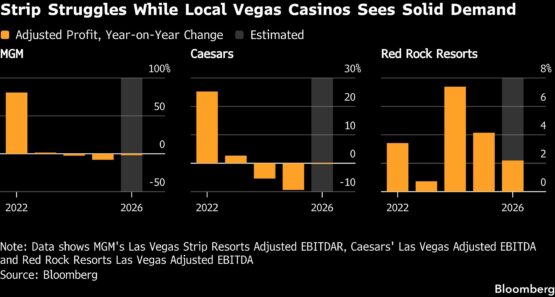
In 2025, MGM experienced its first drop in Las Vegas Strip resort revenue since 2020, while Caesars’ Las Vegas revenue also declined in 2024 and 2025.
Projected data for 2026 indicate minimal short-term improvements. Quarterly visitor estimates for most major casino operators are still down, with Red Rock Resorts Inc—exclusive to Las Vegas—being the sole company to post growth, as per Placer.ai data.
“I wouldn’t anticipate a significant rebound,” stated Brian Egger, a senior analyst for gaming and lodging at Bloomberg Intelligence.
Neighborhood casinos
Outside of the Strip, both Red Rock and Boyd Gaming Corp have seen benefits from an influx of newcomers, particularly retirees, complemented by wage increases for Strip employees. Nevada’s absence of income tax has sparked migration, enhancing local spending at neighborhood casinos despite a lull in tourism.
These companies, unlike their Strip counterparts, rely heavily on gaming rather than hotels, restaurants, and entertainment, which has proven advantageous.
Read: Dubai is overshadowing Las Vegas in travel appeal
Red Rock’s revenue grew by 3.7% last year, following a 12% increase in 2024. Boyd’s core local customer base remained stable in the first quarter, with residents opting to spend closer to home, according to CEO Keith Smith during the earnings call. However, this was insufficient to counterbalance revenue declines across its Las Vegas locals and downtown segments, primarily due to decreased foot traffic.
Adjusted profits for MGM and Caesars from the Strip fell at the highest rates since the pandemic last year. Image: Bloomberg
ADVERTISEMENT:
CONTINUE READING BELOW
Strip operators have reacted by slashing prices and offering bundling options to fill hotel rooms, addressing weaknesses in their lower-tier establishments while demand at premium venues remains resilient. Wynn Resorts Ltd, where room rates are approximately double that of MGM and Caesars, reported an uptick in revenue and profit last year.
“Whether it’s the infamous bottle of water or Starbucks Coffee at Excalibur costing $12, it’s on us,” commented MGM CEO William Hornbuckle during an October earnings call.
Read: Monitoring the coronavirus outbreak’s effects on business and travel
Attracting budget-sensitive travelers may necessitate further incentives, potentially impacting profit margins, noted Macquarie Capital analyst Chad Beynon in an email. Adjusted profits for MGM and Caesars from the Strip have decreased significantly since the pandemic last year.
ADVERTISEMENT:
CONTINUE READING BELOW
The downturn is also impacting small businesses. Alex White, co-owner of Yukon Pizza, reported declining sales since October due to reduced tourist traffic, which typically accounts for about 20% of his clientele.
“If there are no tourists to fill that 15%-to-20% gap, it presents challenges,” said White.
At Omelet House, a diner situated just off the Strip, first-quarter sales plummeted 13% compared to the previous year. Owner Kevin Mills has minimized overtime, paused hiring, and cut seating to control expenses, with tourists representing half of his business.
Mills, who has managed the restaurant since 1990, is relying on Las Vegas’s cyclical nature to rebound. In the meantime, he advises price-sensitive visitors to explore more affordable dining options beyond the Strip, where a plate of bacon and eggs can cost $30.
Strip alternatives
Outside the city, regional casinos have shown more consistent results. MGM and Caesars reported slight revenue increases outside of Las Vegas last year, with Penn Entertainment Inc showcasing gains in most of its markets. Boyd’s Midwest and South sectors delivered the strongest revenue growth in the first quarter.
Truist analyst Jonas noted that gamblers may have opted for alternatives instead of Las Vegas last year.
The rise of online casinos and prediction markets has introduced new hurdles, yet concerns that these platforms are significantly diverting customers are largely exaggerated, according to analysts and executives.
Digital gambling remains restricted to a select few states, with operators like MGM and Caesars managing their own platforms. Prediction markets constitute a ‘niche’ category, making up around 7%-8% of the market, as stated by MGM’s Hornbuckle during a March conference.
Read: Online betting market explodes to twice the size of casinos
Although the U.S. casino landscape is saturated, Las Vegas continues to attract visitors through events and performances, including concerts at the Sphere, a gigantic arena that opened in 2023. “It’s a getaway,” asserted Citizens analyst Jordan Bender. “It doesn’t necessarily mean more gambling.”
“If you’re looking for a fun weekend for just a couple of days, it’s a solid choice,” remarked Suter.
However, others express caution. “Should the economy falter, Las Vegas won’t be the preferred destination for investors in such a scenario,” Bender noted.
© 2026 Bloomberg