
Botswana Becomes First African Nation to Raise Interest Rates Since the War
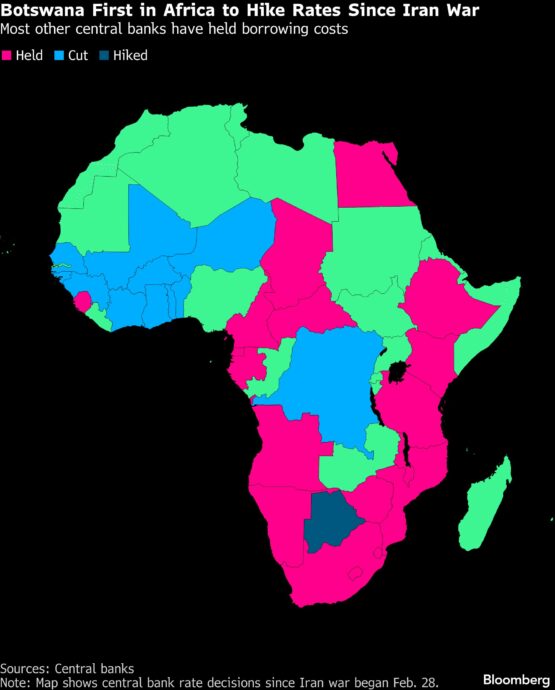
Botswana has become the first central bank in Africa to increase interest rates following a global energy crisis triggered by the Iran war, with inflation expected to more than double this month.
The monetary policy committee raised the key interest rate to 5.5%, up from 3.5%, Governor Lesego Moseki announced to reporters during a briefing in Gaborone on Thursday.
“The MPC anticipates a significant increase in inflation in the short term, potentially surpassing the upper limit of the target range of 3% to 6% in the second quarter due to recent hikes in fuel prices, public transport fares, and medical aid premiums,” he stated. “Inflation is projected to average 8.7% in 2026, then decrease to 5.6% in 2027.”
ADVERTISEMENT
CONTINUE READING BELOW
The increase aims to enhance policy transmission, the governor added, while cautioning that inflation might exceed expectations due to second-round effects from rising domestic fuel costs and possible hikes in administered prices like electricity tariffs and public transport rates.
The ongoing US-Israel conflict with Iran, which commenced on February 28, has resulted in soaring food, fertilizer, and energy prices due to the closure of the Strait of Hormuz — a key transit channel for approximately one-fifth of the world’s maritime oil and liquefied natural gas and a significant portion of vital crop nutrients. In response, governments worldwide have adjusted their monetary policies, imposing energy price caps and reducing fuel taxes.
Oxford Economics noted that rising fuel prices will have a “substantial” effect on Botswana’s inflation this year, given the significant role transport plays in the consumer price index, one of the highest in Africa.
The central bank predicts inflation will spike to 8.9% this month due to the war in Iran, up from 4.2% in March, marking the highest rate in three years, according to Innocent Molalapata, an official at the bank.
For nations like Botswana, which are already experiencing economic strain from a downturn in the diamond industry — contributing roughly 80% of exports and a third of government revenue — the war is exerting additional pressure.
ADVERTISEMENT:
CONTINUE READING BELOW
“With fiscal pressures likely to remain high in the near term, Botswana’s interest rates may stay elevated for an extended period, continuing to impact consumer borrowing,” advised Lyle Begbie, an economist at Oxford Economics, in a note on Thursday.
The southern African nation is also battling an outbreak of foot-and-mouth disease, which has restricted beef exports to the European Union, a critical market.
The outbreak and subsequent restrictions on livestock movement and slaughter could lead to higher food inflation, according to the governor.
© 2026 Bloomberg