
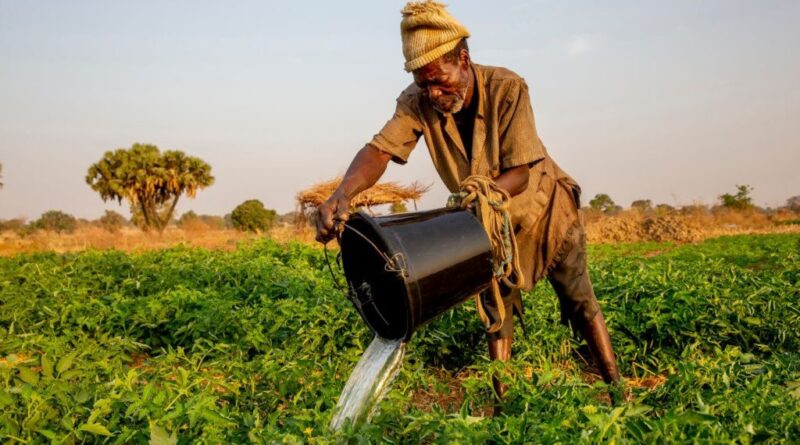
Gulf Shipping Standoff Impacts Africa’s Most Vulnerable Farmers
Malawi, a landlocked nation surrounded by wealthier and more powerful neighbors, has long grappled with challenges stemming from its geography and economic situation. Currently, it is facing the acute consequences of a crisis unfolding over 3,000 miles away.
As farmers contend with escalating fuel prices and a diminishing supply of fertilizer, global apprehensions mount regarding the adverse effects on agricultural outputs.
Read:
Soaring fuel prices due to conflict threaten South African wheat and corn crops
Countries rush to secure sufficient fertilizer and avert a food emergency
South African farms face drought risks compounded by the Iran crisis
African nations, where over half of the 1.3 billion populace depends on agriculture, share the vulnerability with certain regions of Asia. Malawi exemplifies the dire implications for food security.
Small-scale farmers represent the majority of Malawi’s 22 million residents. As they gear up for planting season, the costs to transport fertilizer to rural areas are becoming prohibitive, assuming availability is not already an issue.
The effective closure of the Strait of Hormuz, as the US and Israel engage in conflict with Iran, has obstructed global supplies of both fuel and fertilizers.
Read:
Oil prices surge as Hormuz remains blocked following Trump’s rejection of Iran’s proposal
South African wheat planting anticipated to hit an 11-year low as costs soar
“My primary concern this year is not merely the cost, but the availability,” stated Yashodan Gharat, Malawi country director at One Acre Fund, a nonprofit that aids farmers across 10 African nations. “Everyone will be seeking fertilizer, and the question remains: will it reach a small market like Malawi? I have my doubts.”
The impact of ongoing warfare has prompted the United Nations to issue warnings about skyrocketing food prices in a continent already facing famine alarms and where governments have limited capacity to assist.
ADVERTISEMENT
CONTINUE READING BELOW
Africa also demonstrates lower average fertilizer use compared to regions like Europe, which threatens its soil’s nourishment levels, as indicated by producer Yara International ASA.
Farmers in countries such as Nigeria and Lesotho report they are forgoing fertilizer or reducing the area planted. South Africa anticipates its lowest wheat harvest in 12 years as winter planting commences. In Senegal, some are turning to cheaper alternatives.
“In much of sub-Saharan Africa, particularly where smallholder farmers already utilize minimal fertilizer, any price increase can dramatically diminish input usage and further reduce already low yields,” noted a March report from the UN’s Food and Agriculture Organisation. This poses risks of “lower harvests, impacting consumption, and driving food price inflation,” they stated.
The cost of the most commonly used nitrogen fertilizer, urea, has skyrocketed more than 90% as the Strait of Hormuz remains blocked. Approximately one-third of global urea exports, 20% of ammonia, and 20% of phosphate fertilizer transit through the strait from countries like Qatar, Saudi Arabia, Iran, and the United Arab Emirates.
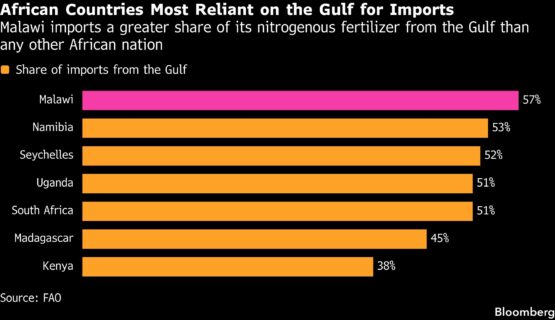
Nearly 60% of Malawi’s nitrogen fertilizer imports come from Gulf nations, according to the FAO, making it one of the most fertilizer-dependent countries worldwide.
Read: Inflation rises as impacts of the Iran oil crisis begin to register
The US and Iran remain at an impasse regarding how to conclude the conflict and restore maritime passage. Nonetheless, even with a resolution, a revival of fertilizer shipments may be sluggish due to marine congestion and the time required to restart production, according to Ashish Lakhotia, head of agricultural inputs at commodities trader ETG Group.
Orders placed by his company have been canceled or redirected, and China is limiting exports to ensure domestic sufficiency, he noted.
ADVERTISEMENT:
CONTINUE READING BELOW
In West Africa, farmers face not only the challenge of affording fertilizer at the planting season’s onset but also the difficulty in sourcing it. Gideon Idika, an agricultural support officer assisting palm oil, cocoa, and cashew farmers in Nigeria’s Abia State, finds this concerning.
“Farmers are skipping fertilizer because they cannot bear the increased costs, leading to poor harvests,” said Idika, who also manages a 200-acre palm oil plantation. “The high prices have also opened avenues for emergency blenders who mix whatever is available and sell it, often low-quality fertilizer.”
Read: Global growth slows, providing minimal economic reprieve for Africa
In Senegal, farmers near Thies lament rising costs and dwindling availability. “I couldn’t obtain high-quality fertilizer, so I’m resorting to what I can afford instead of what I usually prefer,” explained Ngoaye Diop, a vegetable grower.
Throughout Ghana, many suppliers are struggling to import fertilizer due to shortages and prolonged delivery times, stated Nana-Aisha Mohammed, regional director for the African Fertiliser and Agribusiness Partnership, a nonprofit focused on enhancing nutrient access. “We are confronting a crisis,” she declared.
The potential ramifications are particularly severe in Malawi, which has already faced recurrent food shortages due to climatic events like droughts, floods, and cyclones in recent years. Nestled between Zambia, Tanzania, and Mozambique, it ranks as the poorest nation globally that is not in active conflict.
Between October and March, 22% of Malawians experienced acute food insecurity, as per the Integrated Food Security Phase Classification, a global coalition incorporating UN agencies and the World Bank.
A strong harvest eased some concerns, but soaring fuel prices and diminishing fertilizer availability pose significant challenges.
ADVERTISEMENT:
CONTINUE READING BELOW
Read:
Zambia reduces rates as inflation softens, departing from global trends
‘Food price hikes are imminent,’ warns Boxer CEO
Local agricultural organizations anticipate being at the back of the line for fertilizer shipments from ports in Mozambique and South Africa. In the event of shortages, supplies are likely to be allocated to wealthier buyers who are easier to serve.
For those shipments that do arrive, the inflated prices may hinder Malawi’s capability to maintain or expand the subsidies provided for its largely subsistence farming population. The government has been negotiating with creditors regarding a $13 billion debt since 2022.
Read:
US-sanctioned tanker challenges Trump’s blockade with exit from Hormuz
Fuel prices surge across Africa as governments scramble to respond
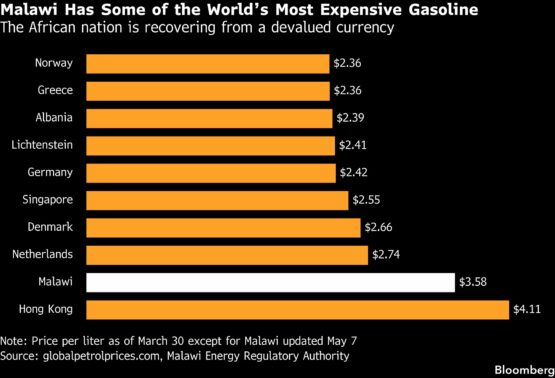
Queues for fuel are lengthening, even as prices exceed $3.50 a liter for both diesel and gasoline. The government is liquidating gold reserves to finance fuel imports and has requested emergency funds from the World Bank.
“It’s astonishing when you consider that Malawi is among the poorest nations globally, heavily reliant on imports, most of which arrive by road,” remarked Grace Jackson, Malawi country director at GiveDirectly, a nonprofit that connects donor contributions to impoverished individuals.
“The food security outlook for Malawi next year appears quite alarming. We may face millions experiencing extreme hunger levels.”
© 2026 Bloomberg