
Indonesia’s Budget Strained by $15 Billion in Free Meal Disbursements
In a modest blue-and-white structure located in Indonesia’s southernmost province, the clattering of pots and pans begins just before dawn.
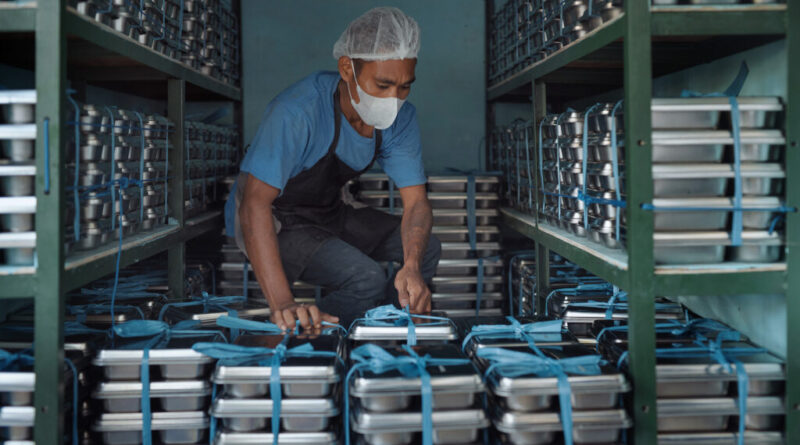
Daily, staff at this kitchen prepare approximately 2,500 meals for local schools and community health centers.
The coastal village of Timor is closer to Australia than Jakarta, serving as a small part of a broader initiative that President Prabowo Subianto is eager to launch at a rapid pace, aiming to provide free meals to every child across Indonesia’s numerous islands—regardless of necessity or demand.
“The work is ongoing, day in and day out,” shared Yufrianti Hautias, 24, a former educator now managing the kitchen in Toineke. “As one team wraps up, another starts.”
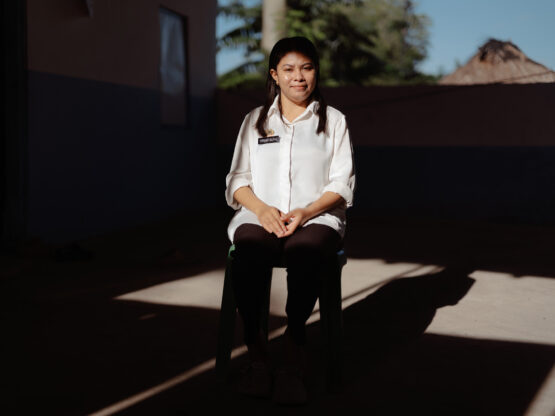
Yufrianti Hautias supervises the kitchen in Toineke. Image: Muhammad Fadli/Bloomberg
This initiative was a cornerstone of Prabowo’s 2024 campaign and has quickly evolved into one of the largest of its kind globally. However, its operational costs are staggering, absorbing over 6% of the national budget, and visits by Bloomberg News to kitchens, schools, and markets reveal limited evidence that the programme is transforming the economy in its initial phases.
Local farmers report a lack of significant profit increases, and some children still leave school hungry. The logistical challenges of delivering meals across vast distances are putting a strain on remote kitchens, with critics suggesting that targeting only those in need would enhance the programme’s effectiveness.
Investors and analysts are skeptical about whether the meals can generate enough economic impact to justify the substantial financial investment, especially as Indonesia’s economic situation grows increasingly strained.
“I would give it an F,” remarked Bhima Yudhistira Adhinegara, executive director of the Jakarta-based Center of Economic and Law Studies, or CELIOS. “The free meals programme is indeed problematic both fiscally and operationally.”
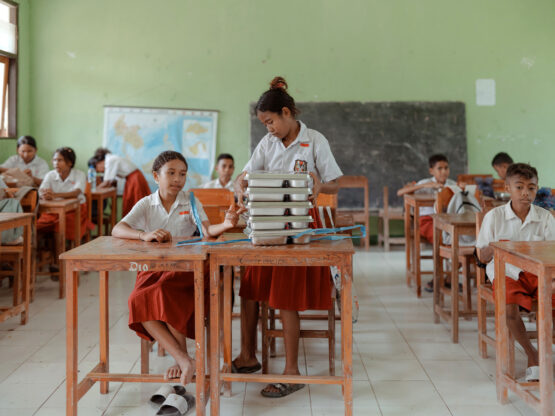
School children receiving complimentary meals at an elementary school in Toineke, East Nusa Tenggara, Indonesia, in March. Image: Muhammad Fadli/Bloomberg
Prabowo, a retired general, considers these meals vital for improving nutrition and encouraging school attendance while simultaneously supporting farmers, generating employment, and stimulating economic growth. The initiative promises balanced meals on weekdays for school children and six days a week for toddlers, breastfeeding mothers, and pregnant women.
In 2025, the government allocated 51.5 trillion rupiah ($3 billion) for the programme. This year, it aims to contribute five times that amount, targeting nearly 83 million individuals—about 30% of the overall population. The finance ministry has indicated that funding could increase even further in 2026.
“I initiated this because I couldn’t bear to see our children malnourished,” Prabowo stated in a March interview. “What I hear everywhere is that prosperity is rising at the village level.”
While Prabowo claims the programme—still less than a year old—is functioning, he has acknowledged the necessity for enhancements. “There will be challenges,” he noted. “And we will address those challenges.”
ADVERTISEMENT
CONTINUE READING BELOW
Nevertheless, investors worry that Indonesia may exceed its longstanding 3% budget deficit limit. Moody’s and Fitch Ratings have adjusted Indonesia’s credit outlook to negative, with rising energy prices and inflation due to the Iran war adding to concerns.
Some critics question whether free meals serve more as a means for Prabowo to enhance his image—acting as a paternal figure providing for the populace—rather than delivering tangible benefits to Indonesia’s economy.
“We regard the scale of the programme as a negative development overall,” said Louis Lau, a portfolio manager at Brandes Investment Partners in San Diego. “It raises concerns about budgeting priorities and the higher spending levels likely to persist well into 2027 and beyond.”
If anything, Prabowo is intent on expanding the programme, potentially to include the elderly. Dadan Hindayana, who oversees the nutrition agency, mentions frequent communications with the president, emphasizing the directive to “accelerate operations.”
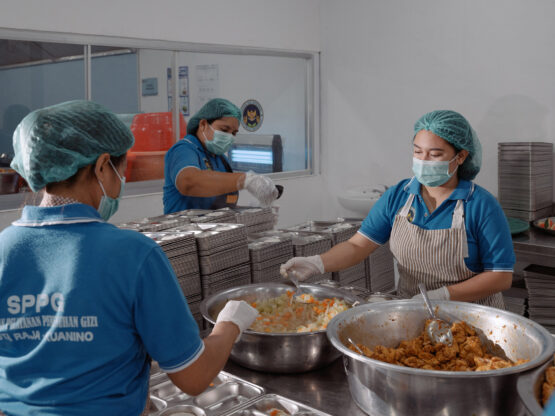
Kitchen staff prepare food for the free meals programme in East Nusa Tenggara. Image: Muhammad Fadli/Bloomberg
Over 25,000 kitchens are currently operational across Indonesia, each capable of serving up to 3,000 meals per day.
This includes the kitchen in East Nusa Tenggara, one of the nation’s most impoverished regions. On a March morning, workers in hairnets and gloves sing as they prepare meals—dragon fruit, rice, beans, carrots, tempeh, and boiled eggs. Loaded trays are stacked, trucks are filled, and drivers embark on long deliveries.
Meals are distributed to a small preschool, where four children play with alphabet and number stones. At an elementary school, kids line up in a classroom, and one child offers a prayer before they all open their trays. The headmistress appreciates the free meal but emphasizes that sufficient funds for improved facilities, such as a library, are crucial for keeping kids engaged. Her school has one projector and three laptops shared among hundreds of students.
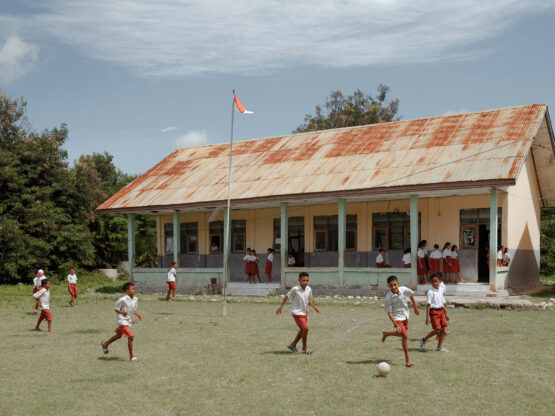
School children attending an elementary school in East Nusa Tenggara. Image: Muhammad Fadli/Bloomberg
“What are the opportunity costs of implementing this programme instead of other government initiatives that could utilize the budget more effectively?” inquired Jimmy Berlianto, a senior researcher at the Center for Indonesian Policy Studies.
Operating a kitchen in such a remote area presents numerous challenges. Securing fresh ingredients often necessitates a four-hour round trip, as local farmers struggle to meet demand. During an attempted delivery to a health center—an open facility for pregnant and breastfeeding mothers—one truck becomes stuck in mud, forcing workers to transport trays by hand for the remainder of the journey.
“The distances are vast, and some drop-off points only serve 10 or 20 individuals,” Hautias explained. “Muddy roads and frequent flooding often complicate meal delivery.”
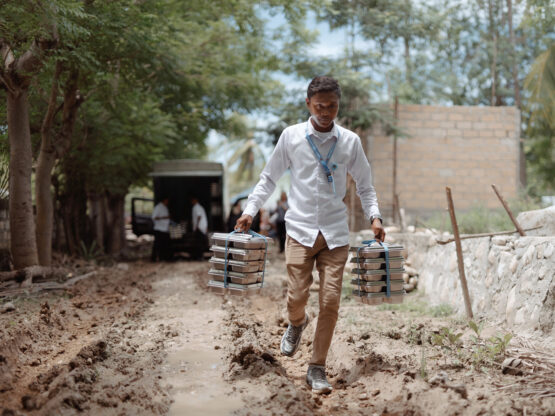
After a delivery vehicle gets stuck in the mud, workers carry the remaining meals to their destination in East Nusa Tenggara, Indonesia. Image: Muhammad Fadli/Bloomberg
On a national scale, there are widespread issues, including well-documented incidents of food poisoning. Parents express concerns that their children return home hungry or that meals consist of ultra-processed snacks.
ADVERTISEMENT:
CONTINUE READING BELOW
Hindayana acknowledges the need for improvements but insists that “the programme will proceed as planned.” However, the agency has ceased operations for over 2,000 kitchens due to issues like food hygiene violations or temporarily suspended payments. Hindayana mentions that all kitchens are undergoing assessment and speaks of implementing an accreditation system with defined criteria—rating each kitchen as A, B, or C based on performance.
“The primary focus is on quantity, followed by quality,” he asserted.
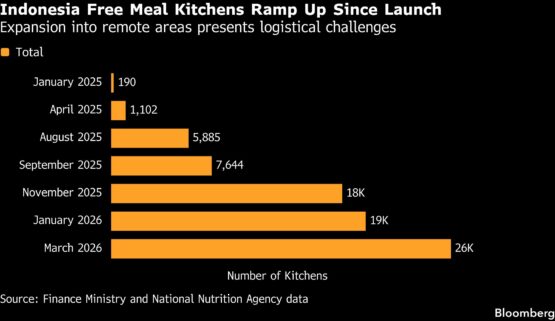
The government claims that the distribution of free meals is creating jobs and stimulating consumption. Economic modelling by the National Research and Innovation Agency estimates that the programme could contribute between 14.5 trillion to 26 trillion rupiah to the gross domestic product.
Nonetheless, this figure is only a fraction of the potential annual funding. Some cabinet members express dissatisfaction over the substantial budget allocation for free meals but fear mentioning it to Prabowo due to his strong commitment to the initiative and according to insiders, because of his volatile temperament.
Activists are pushing for reform—legal actions are being taken to halt the programme—arguing that assistance should be targeted towards areas with proven needs. The nutrition agency has instructed kitchen directors not to mandate participation.
When asked in the March interview if he would consider cutting the programme to manage the budget, Prabowo stated, “I wouldn’t touch free meals.” However, shortly thereafter, the government announced a limit to five meal distributions per week, reducing expenses by approximately 20 trillion rupiah. A finance ministry spokesperson did not immediately provide comments regarding potential further budget cuts to the programme.
According to CELIOS’s Adhinegara, research indicates that workers in kitchens—each staffed by about 47 individuals—are categorized as volunteers and paid hourly. Moreover, there is a substitutional impact on existing canteens or businesses previously providing school meals.
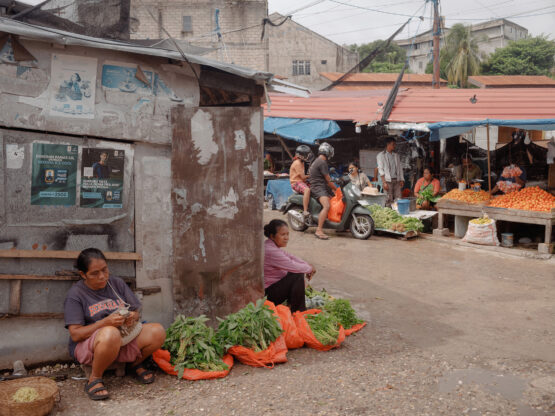
The central market in Kupang, East Nusa Tenggara. Image: Muhammad Fadli/Bloomberg
Farmers also report failing to see a windfall. At a market in Kupang, the largest city on Timor, one vendor mentioned that she and her husband occasionally received orders from a kitchen, but they often arrived late, forcing them to hurry to source from farmers—a stressful endeavor for minimal gain. Another vendor mentioned getting sporadic orders for fruits like oranges.
Rinto Jami, 26, cultivates green vegetables with his parents on four rented plots nearby, which can be harvested nearly year-round. However, when a kitchen approached him for supplies, they offered a price only slightly above his production cost. He declined.
“If we’re operating at a loss, who is actually feeding the children—the farmers or the government?” questioned Dina Udju Edo, Jami’s mother, as they sorted vegetables in the field.
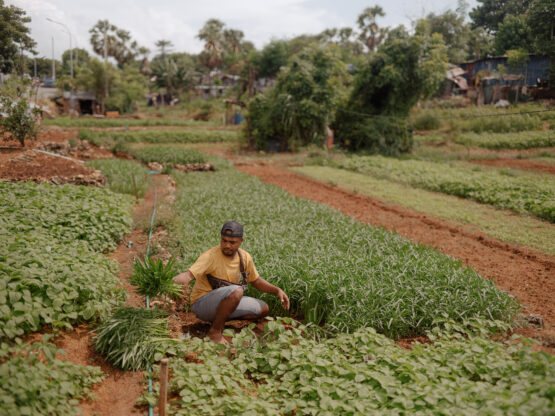
Rinto Jami harvesting vegetables on his farm in Kupang. He declined to supply a kitchen after they offered a price barely above the production cost. Image: Muhammad Fadli/Bloomberg
ADVERTISEMENT:
CONTINUE READING BELOW
The fundamental health issue driving the programme is significant: Nearly one-fifth of Indonesian children faced stunting as of 2024, a condition associated with malnutrition. However, encouraging kids to consume healthy food presents a common hurdle.
Students at a Kupang elementary school often push green beans around their trays, and many grimace at a fried egg drenched in thick red sauce. One resourceful girl even brought chickpea snacks to complement her rice.
Novi Melani Kasaban, a nutritionist at the local kitchen, shares that they’ve faced challenges in getting urban kids to enjoy the meals. Some have developed a preference for snacks available at stalls outside the school, while others prefer their home-packed lunches. They must persuade both parents and children that a less appealing meal could be a healthier option.
“We adapt to the children’s tastes,” she noted, saying that chicken katsu is a popular dish. “They didn’t enjoy sautéed vegetables, so we explore other preparation methods.”
In an effort to connect with the students, one delivery driver has taken to donning superhero costumes. There are signs of evolving preferences: A local snack vendor claims her daily sales of 250,000 rupiah have dipped by half. Despite this, groups of children still wander outside the school for treats—small ice creams or bowls of noodle soup.
“We have no complaints, but the portions are small, so my son asks me to pack him a lunch with rice,” mentioned Erlind Lie, a mother of two.
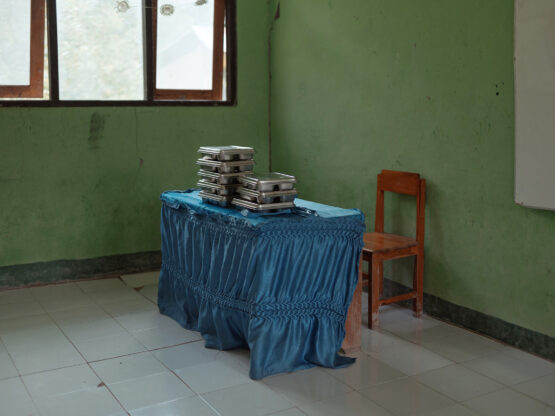
Stacks of free meals at an elementary school in Toineke, East Nusa Tenggara. Image: Muhammad Fadli/Bloomberg
Polls indicate Prabowo remains well-regarded, with nearly 80% of Indonesians satisfied or very satisfied with his leadership, based on a January survey by Indikator Politik Indonesia. The free meals represent a promise from his presidential campaign, and his strongest support comes from rural areas—beneficial for any potential re-election bid following his five-year term.
“People here aren’t picky like in the cities,” Hautias remarked from the Timor kitchen. “There isn’t much leftover.”
Nonetheless, support for the meals appears to be diminishing. In surveys conducted in March and October 2025, a decrease of 0.27 points was recorded on a four-point scale, despite Prabowo’s stable approval ratings, according to a report from the Singapore-based ISEAS – Yusof Ishak Institute.
For Hautias, the focus remains on the logistical challenges of executing the programme effectively. Staff at her remote kitchen rotate through continuous shifts. Afternoons are dedicated to prepping ingredients, with cooking commencing at 2 AM. The meal-packing team arrives before dawn.
“Sundays are somewhat quieter, but we still have to prepare for Monday’s distribution,” she shared. “We essentially have no time to rest.”
© 2026 Bloomberg