
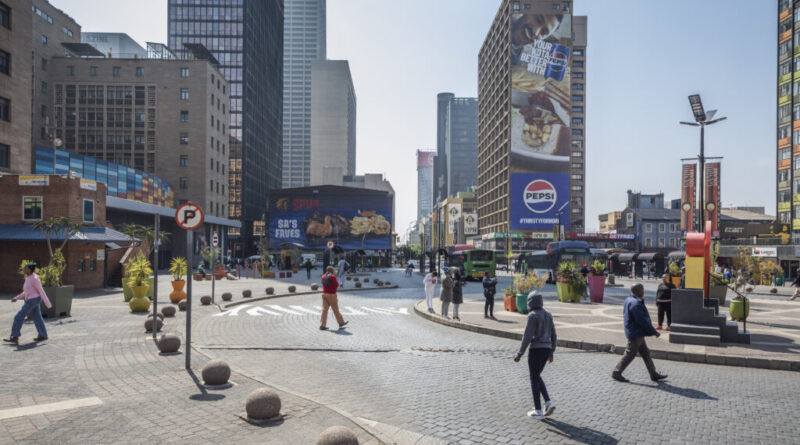
Talk of Joburg’s Revival Grows, Yet Property Data Tells a Different Story
You can also tune in to this podcast on iono.fm here.
JEREMY MAGGS: The inner city of Johannesburg is back in the spotlight as a potential hub of opportunity, yet the data reveals a challenging picture of stagnant property growth, declining sales, and years of neglect.
The pressing question is whether Johannesburg is truly on the verge of a turnaround, or if optimism is outpacing reality.
Listen/read:
Joining us in this discussion is Hayley Ivins-Downes, managing executive of real estate at Lightstone Property. She has appeared on our program before, and we hope to shed some light on Johannesburg’s situation.
Hayley, we’ve encountered the Johannesburg revitalization narrative previously. Do you sense anything genuinely transformative this time?
HAYLEY IVINS-DOWNES: Thank you, Jeremy. It’s crucial to mention that there’s considerable sentiment and various articles and initiatives currently orbiting Johannesburg.
With upcoming polls, there seems to be a genuine push to turn Johannesburg around.
When it comes to property, the situation isn’t rosy. However, with a glimmer of sentiment and hope, there might be an opportunity for renewal and energy.
JEREMY MAGGS: Does your data indicate a legitimate recovery, or are we merely observing sporadic signs of life?
ADVERTISEMENT
CONTINUE READING BELOW
HAYLEY IVINS-DOWNES: It’s still largely sporadic. What was encouraging was at the end of last year, we observed a rise in inflation within the Johannesburg area, something we hadn’t seen in two years.
While Johannesburg was mostly stagnant or even negative, we’ve noticed an uptick.
At the start of this year, there was a high level of optimism for the year ahead.
Unfortunately, with unforeseen global conflicts and ongoing discussions around interest rates, the property market has faced a setback once more.
However, there was a sliver of hope. Certain areas reveal significant activity and investment potential.
Parts of Johannesburg and Pretoria show promising investment opportunities, although the general mood remains a bit pessimistic.
JEREMY MAGGS: The challenge, of course, lies in the fact that Johannesburg’s central business district still lags far behind the suburbs. We can’t ignore the negative impact of crime, hijacked properties, potholes, water issues, and poor governance on investor confidence.
HAYLEY IVINS-DOWNES: Absolutely. Changing that perception will take time, but there is a belief that revitalization is possible and there’s a chance to turn things around.
Read: Cape Town leading in state-funded housing initiatives
One active area of progress is the repurposing of old office spaces into affordable housing. This shift could provide necessary housing solutions in the CBD.
ADVERTISEMENT:
CONTINUE READING BELOW
Elements like this could drive meaningful change.
JEREMY MAGGS: But the scale of these residential conversions remains limited, and that’s not enough to significantly transform the inner city. A more accelerated approach is required for noticeable improvements.
HAYLEY IVINS-DOWNES: Indeed. We need a substantial scale of change to see effective results. It’s clear we have a long road ahead.
JEREMY MAGGS: How critical is the regeneration strategy for affordable housing conversion? Is it merely a solution for stranded office assets, or do you see genuine interest in this emerging from the ashes?
HAYLEY IVINS-DOWNES: I believe it will indeed make a difference. This trend isn’t isolated to the CBD; we see it in other Johannesburg suburbs too, like Sunninghill, where such developments are occurring.
This approach addresses the growing informal housing crisis in various parts of Johannesburg.
If this method can address the affordable housing needs, it’s certainly worth pursuing.
JEREMY MAGGS: Success hinges on effective city management. With elections on the horizon, what should be the city’s priority to regain the trust of property owners and investors?
HAYLEY IVINS-DOWNES: The focal point should be service delivery. It’s essential that roads are repaired and visible improvements are made in everyday life.
ADVERTISEMENT:
CONTINUE READING BELOW
People are paying for services and expect tangible improvements relating to water and electricity issues.
Listen/read: Infrastructure failures pushing Johannesburg towards a critical juncture
Residents want to see real service delivery for the properties they inhabit. It’s where we need to focus efforts for an impact.
JEREMY MAGGS: Looking at Johannesburg now, do you think we are genuinely at a crossroads? Or have we missed that key moment, as some detractors might argue?
HAYLEY IVINS-DOWNES: I believe we have a chance to rectify what needs fixing and improve service delivery.
Read:
Achieving this will require a collaborative effort between government and private sectors to effect the desired change.
JEREMY MAGGS: To what extent do private sector interests and investment opportunities continue to be stifled? What are they waiting to see, beyond the promise of better service delivery?
HAYLEY IVINS-DOWNES: There’s a pressing need to witness a tangible shift within government. A willingness to engage deeply and address the issues will catalyze interest among enterprises.
JEREMY MAGGS: Thank you very much, Hayley Ivins-Downes, managing executive of real estate at Lightstone Property. I appreciate your insights.